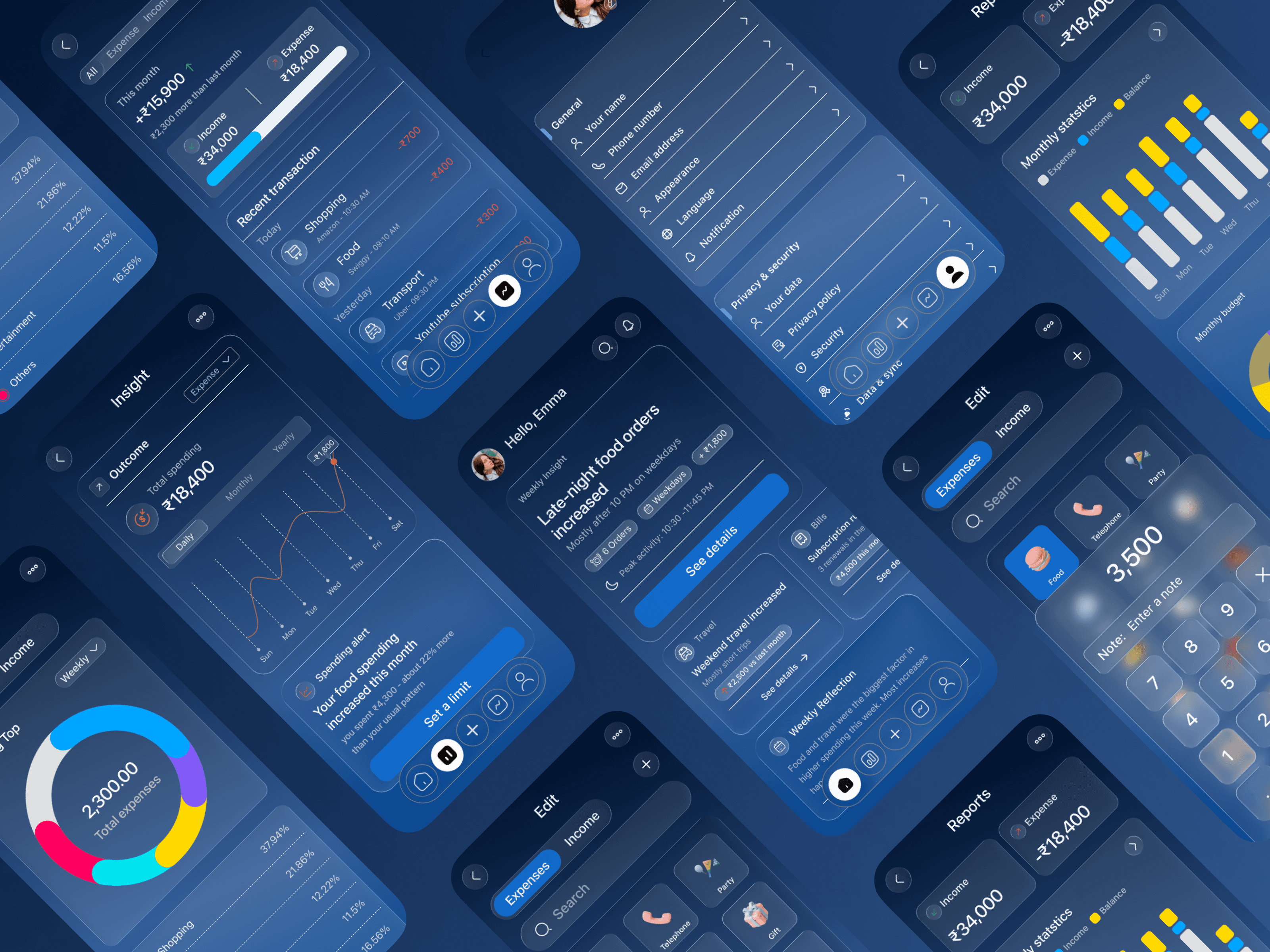
Atlas - Money tracking app UI/UX Case study
Atlas simplifies money. Track spending, understand patterns, and make smarter financial decisions — daily.
Project Overview
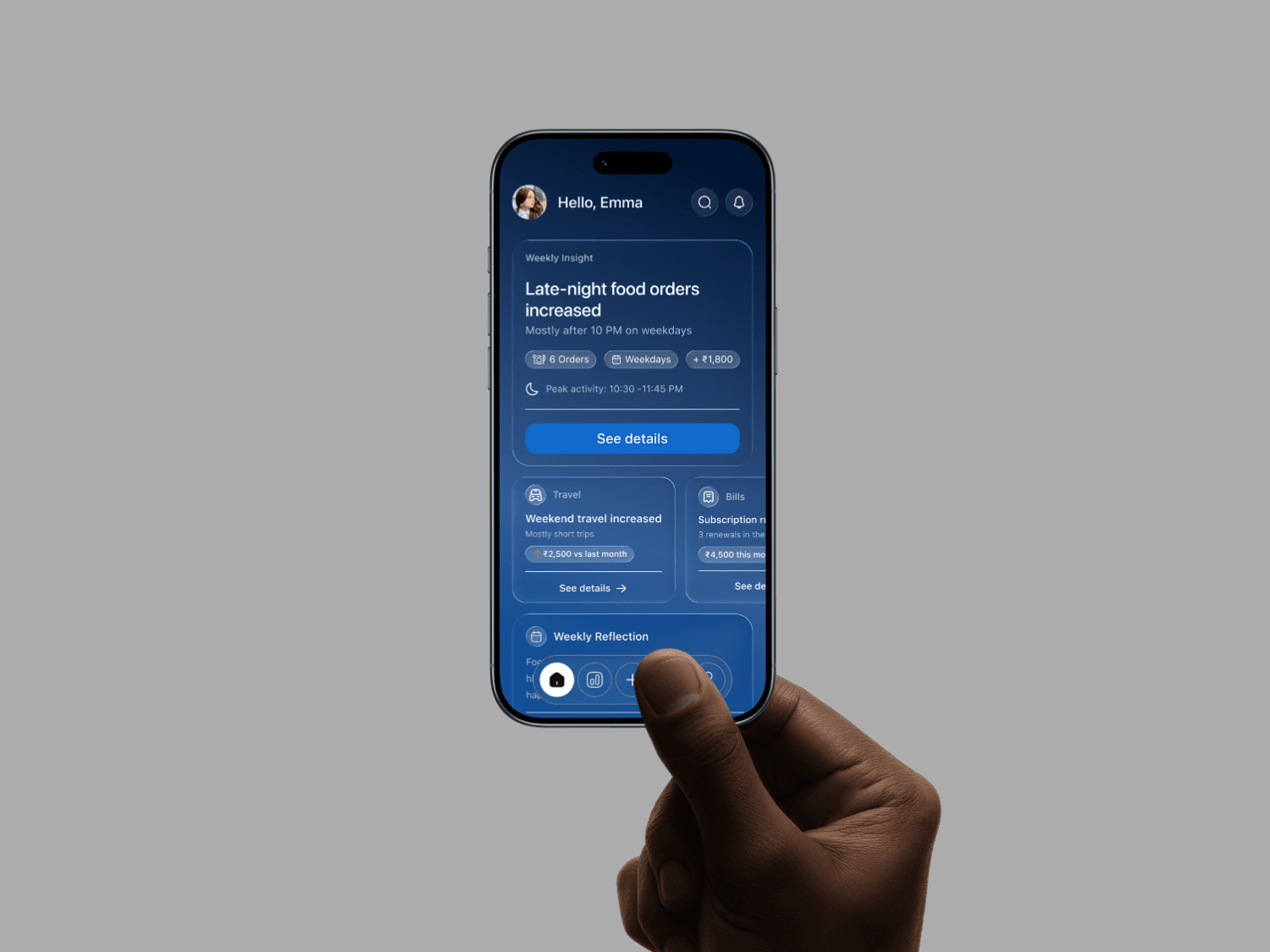
Atlas is a personal finance app designed to help users clearly understand where their money goes not just track expenses. While many existing money apps focus on recording transactions and showing charts, users are often left overwhelmed, confused, or stressed by raw data and generic insights.
Problem
Users need a way to clearly understand where their money goes and why, because current expense trackers only show numbers without insights, leaving users confused, stressed, and unable to improve their spending behavior
Solution
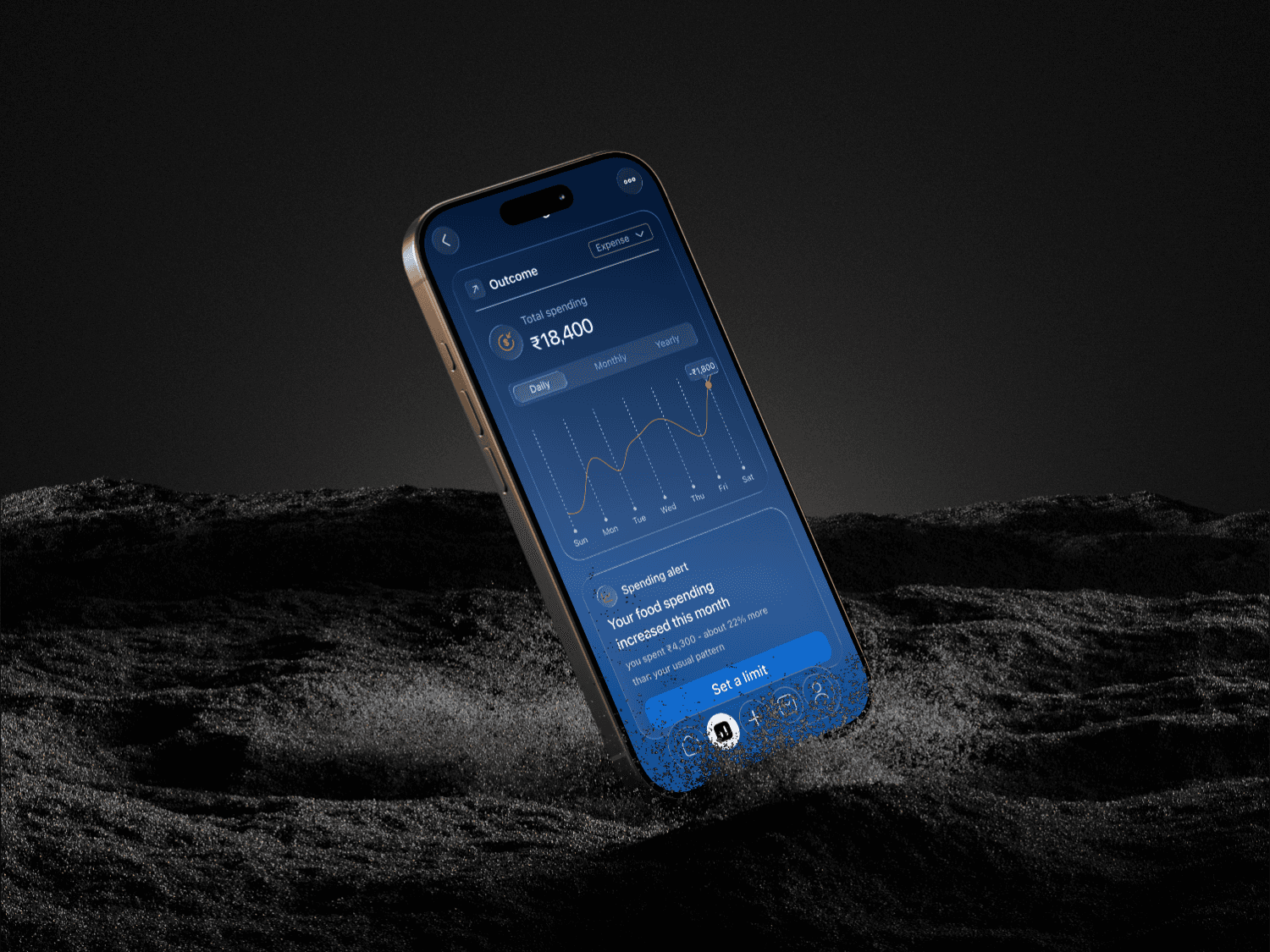
My goal is to design an insight-first money experience that helps users understand where their money goes by transforming expense tracking from a stressful obligation into a calm, guided, and trust driven experience.
Competitive analysis
Before diving into the design process, I explored existing money tracking apps to understand what’s working well and where users still struggle. I analyzed four widely used apps—Money Tracker, Splitwise, Wallet: Budget Expense Tracker, and Cashew to identify common patterns, usability gaps, and missed opportunities in helping users truly understand their spending behavior. • Overloaded dashboards with multiple charts competing for attention. • Heavy emphasis on raw numbers instead of behavioral context. • Budget alerts that feel punitive rather than supportive. • Insights presented as static reports instead of contextual guidance. • Data-heavy screens that require interpretation instead of providing clarity. • Inconsistent hierarchy between balances, transactions, and analytics. • Reactive financial tools (alerts after overspending) rather than proactive awareness. • Generic monthly summaries that lack personalization or actionable meaning.